Painting an Orchid for the World Orchid Conference
Six months, one Zygopetalum Hybrid, and a painting judged by two independent juries.
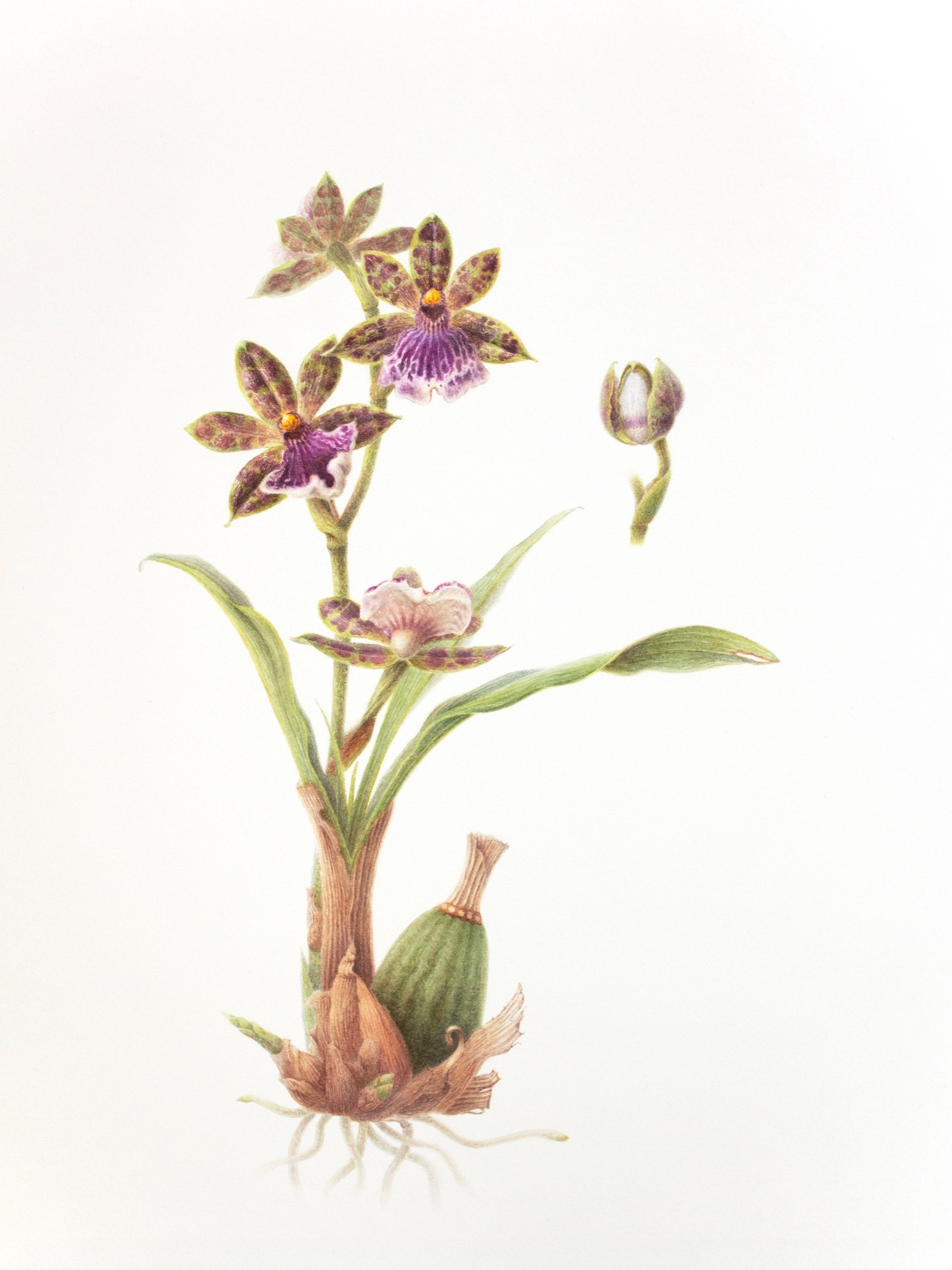
In June 2025, I received an invitation from the Society of Botanical Art Germany (VBKD) to contribute a painting to their exhibition at the 24th World Orchid Conference in Dresden (26–29 March 2026) — hosted by the German Orchid Society. Two independent juries would evaluate every submission: one assessing botanical accuracy, the other artistic merit. The finished work had to be completed and digitised by the end of December. I had roughly six months.
Finding the Right Orchid
Before I could paint, I had to choose — and not just any orchid.
I needed one that would challenge me: a plant with a complexity of colour, a tension between surfaces, the kind of botanical questions that make me pick up a brush in the first place.
While searching, I immersed myself in orchid botany — their anatomy, pollination strategies, how different species develop their blooms, the variety of root systems and habitats they inhabit.
I also knew I wanted to see the plant in person. No online orders — I needed to stand in front of it.
And then, one day, there it was. Lanceolate leaves. Terrestrial roots. Lavish, glistening flowers — dark violet blotches on a green ground, shifting from light to deep, and a scent that stopped me in my tracks. A Zygopetalum Hybrid. What fascinated me most were the pseudobulbs — compact energy reserves the plant builds for its future offshoots. I brought it home that same day.
Documenting the Living Plant
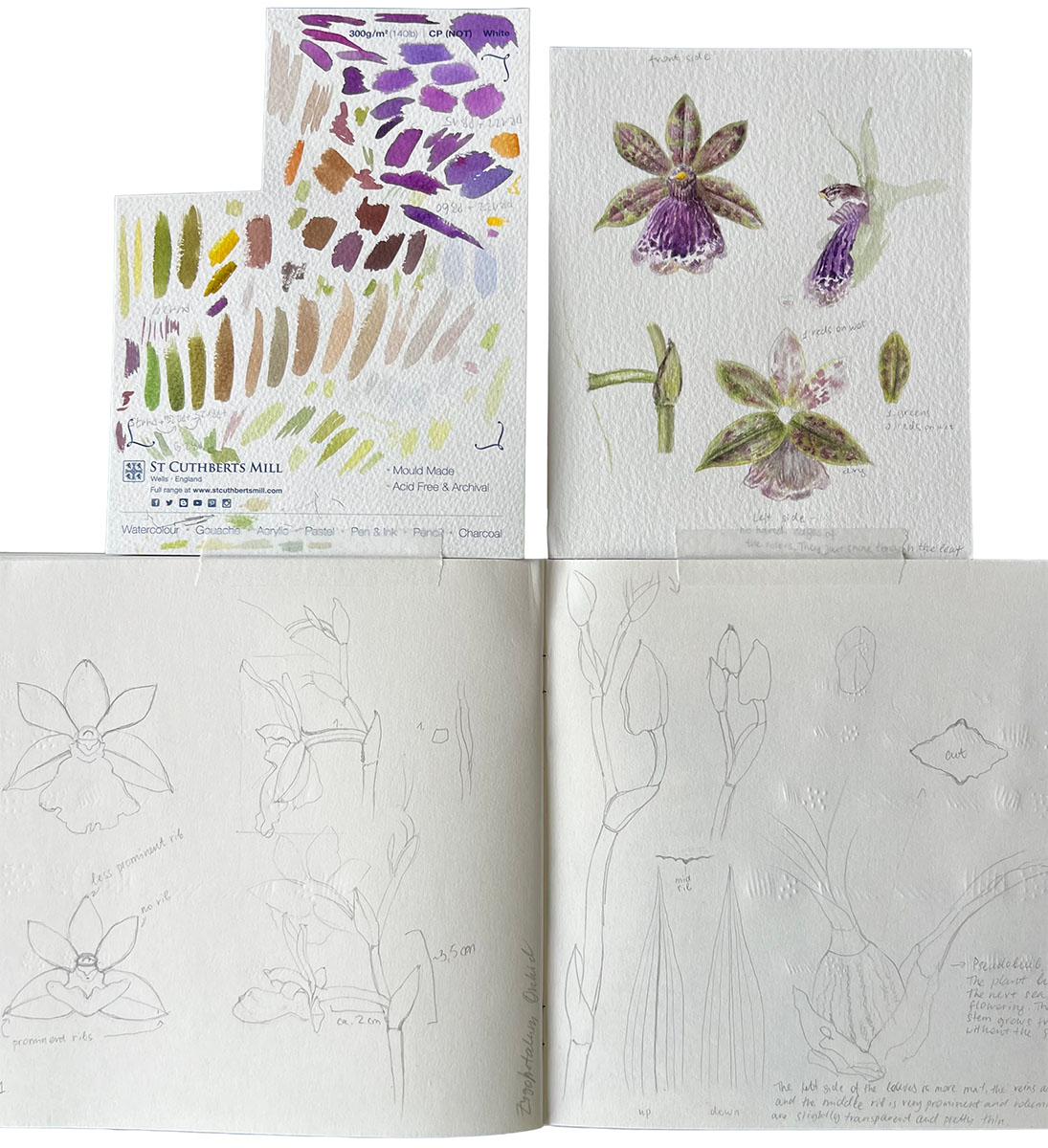
I began recording immediately. My botanical journal, watercolour paper for colour swatches, a ruler, pencils, and brushes — everything laid out beside the plant. I took countless photographs and read extensively about the Zygopetalum genus to deepen my understanding of the species.
What I observed most closely was the life cycle of the blooms. My idea for the final painting was to show the flowers not only from different angles, but in different stages of their development — from young, tightly closed buds to fully open blooms to the quiet retreat of wilting. Each stage was documented with its precise colour nuances, dimensions, and surface qualities.
Composing the Painting
I chose an A3 format on Hahnemühle Leonardo 600 g/m² — A4 would have been far too small for an orchid of this size. It was important to me that the composition wasn’t just visually compelling, but botanically rich: how the leaves attach, where the flower spike emerges, whether the greens differ in temperature, the spacing, the proportions, everything. I worked with sheets of tracing paper, which allowed me to shift elements freely before committing to a final arrangement.
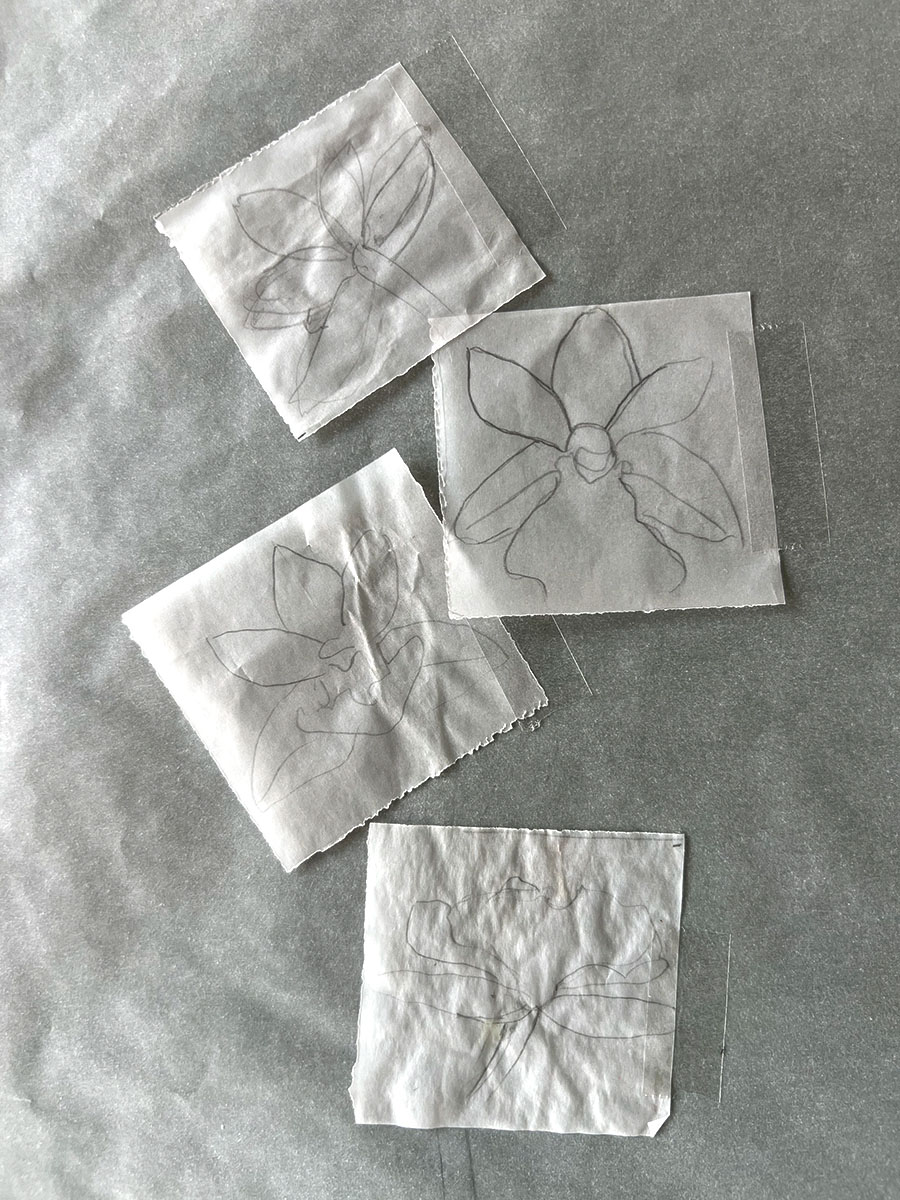
The composition alone took nearly two months, stretching into September. I took deliberate pauses — stepping away so I could return with a fresh eye.
Painting
After transferring the outline drawing, the colour work finally began. I started with what I found most compelling: one of the blooms, painting it to near-completion across several sessions. Depending on the painting, I sometimes work broadly, building layer upon layer across the whole surface. Here, I chose to anchor the piece by finishing one key element first.
The most technically demanding passages, however, were the dried sheaths at the base of the plant. I wanted them to look true to life without dominating the composition. They play an essential role — not only botanically, but in the painting’s system of contrasts: the moist shimmer of the flowers, the softer sheen of the leaves, and the dry, matte texture of the withered material at the base.
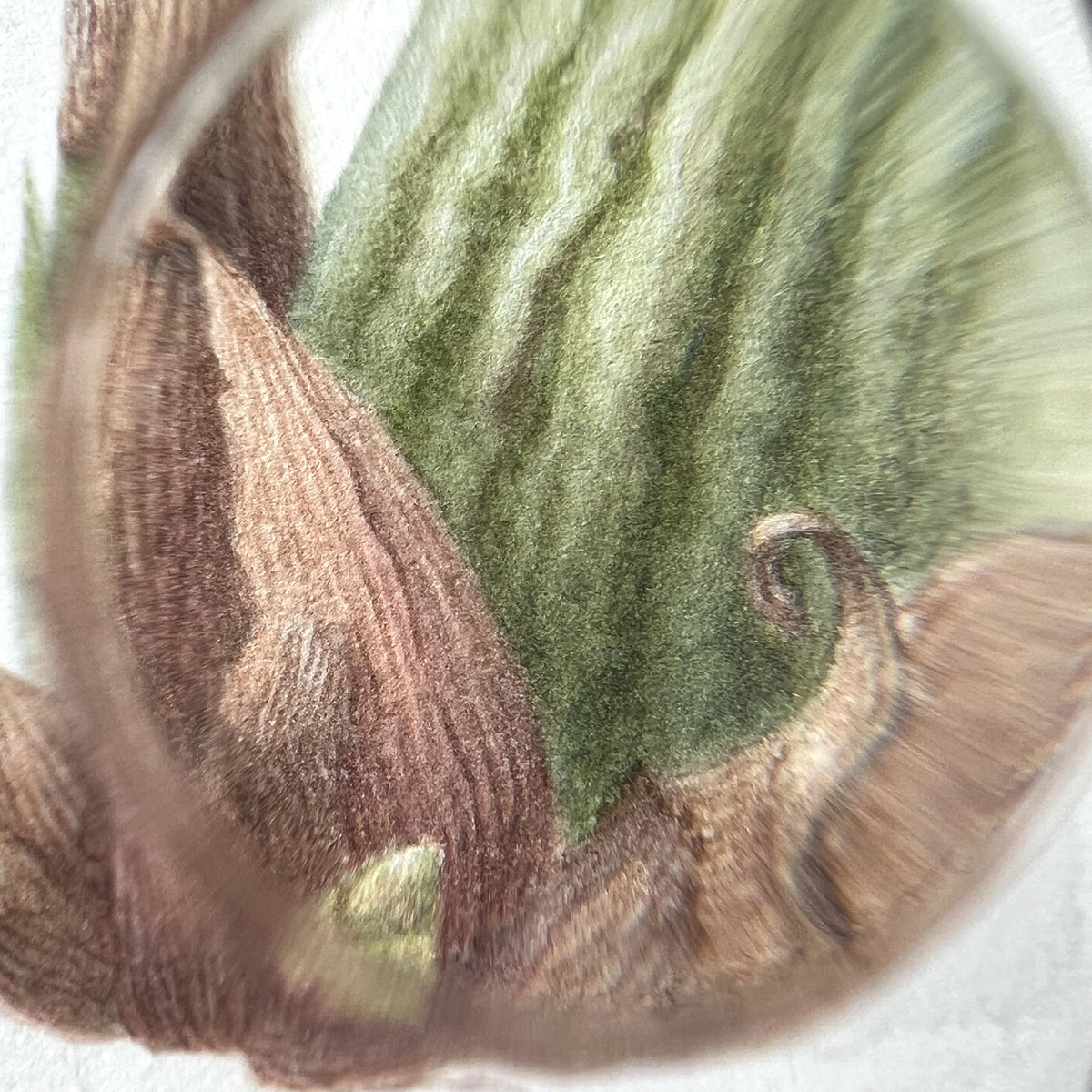
I used nearly every watercolour technique I know: wet-in-wet, wet-on-dry, transparent glazes, stippling, underlays, dry brush — and then more glazes. My largely transparent signature palette served me well once again. (If you’re curious, here’s the free guide to my Signature Palette.)
A magnifying glass became a constant companion.
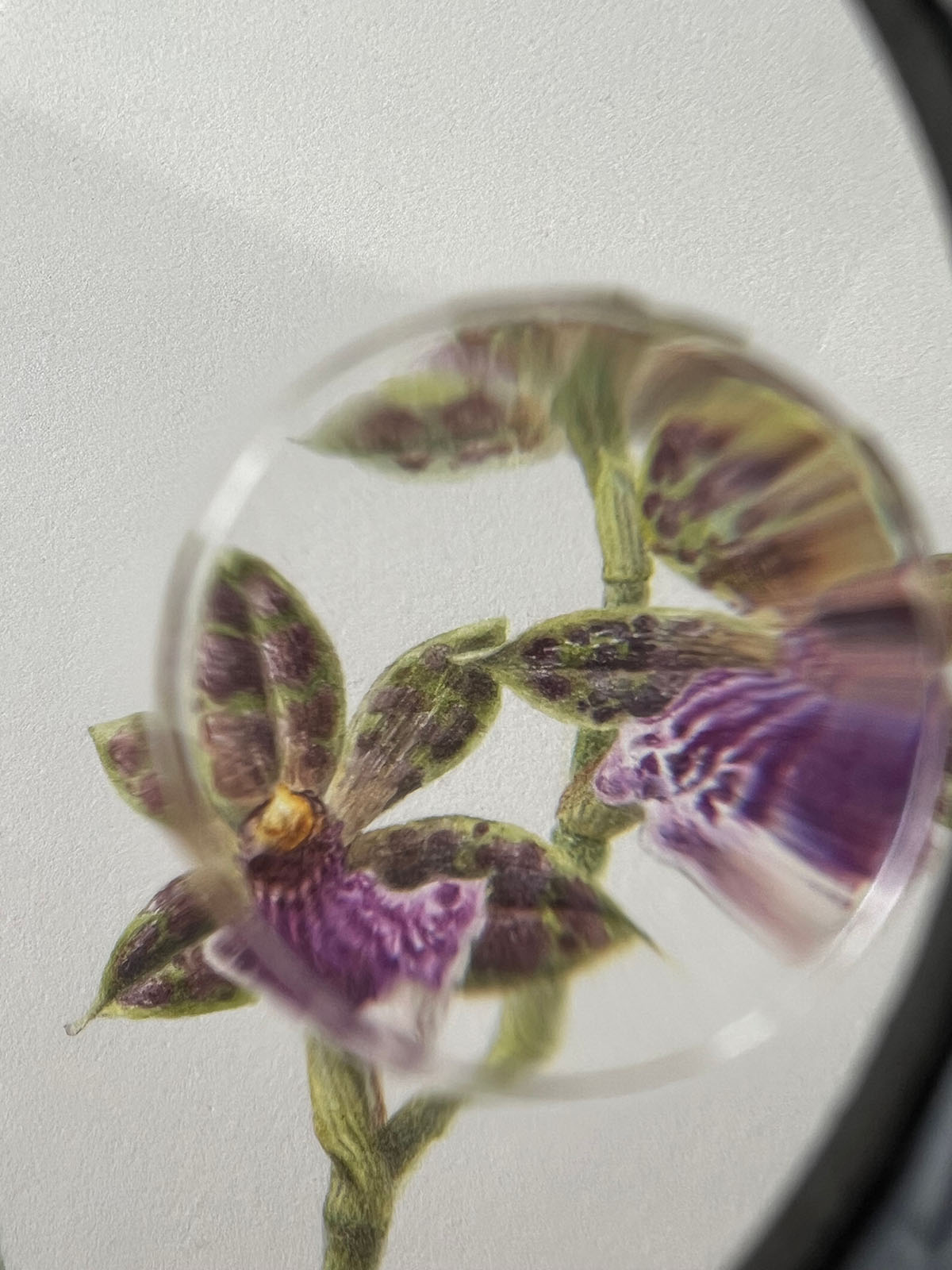
I slowed down — working on smaller and smaller passages, keeping the final glazes especially transparent so the piece would hold its freshness and never feel overworked.
The paper held up beautifully through countless layers.
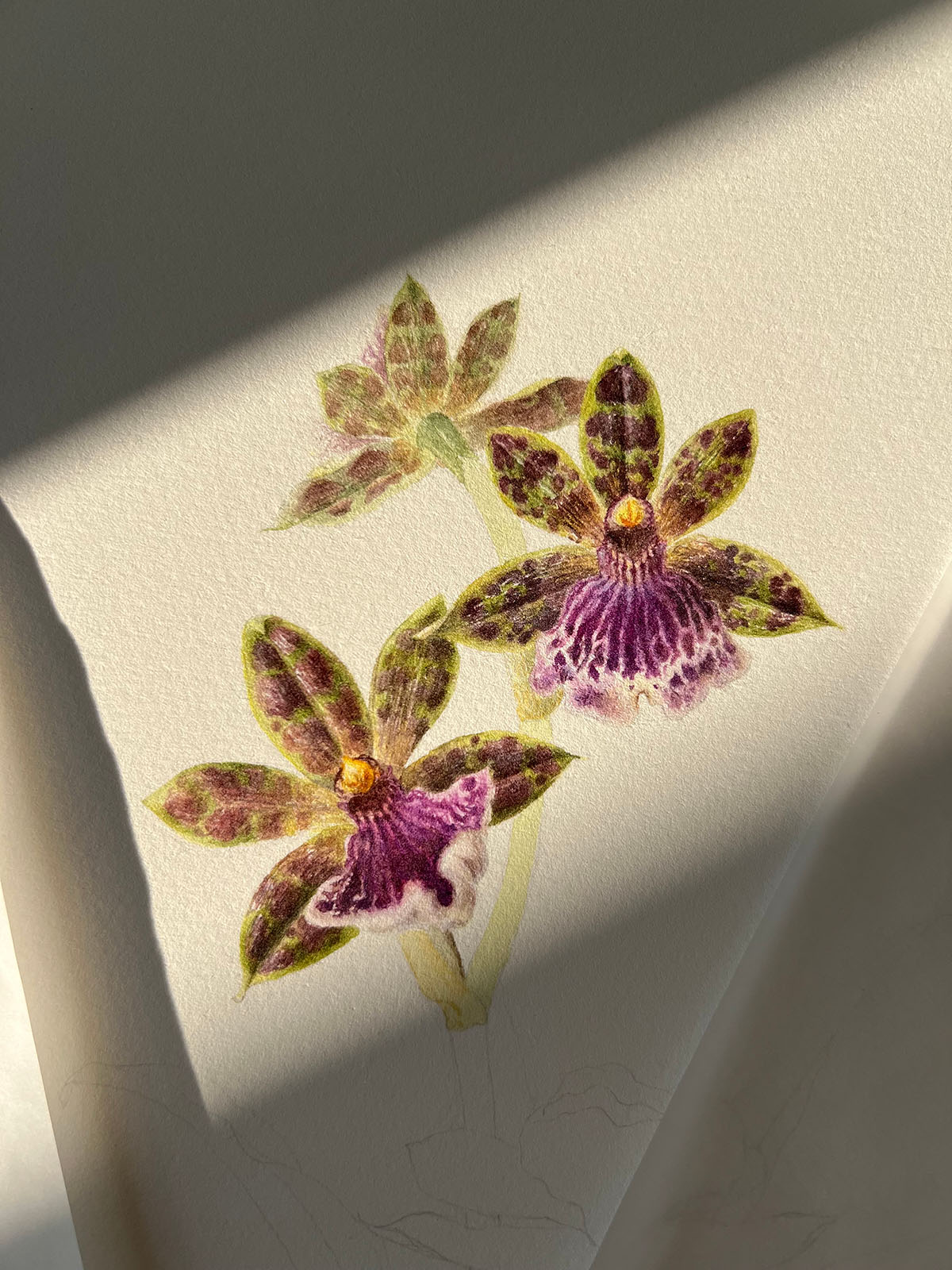
The Finish Line
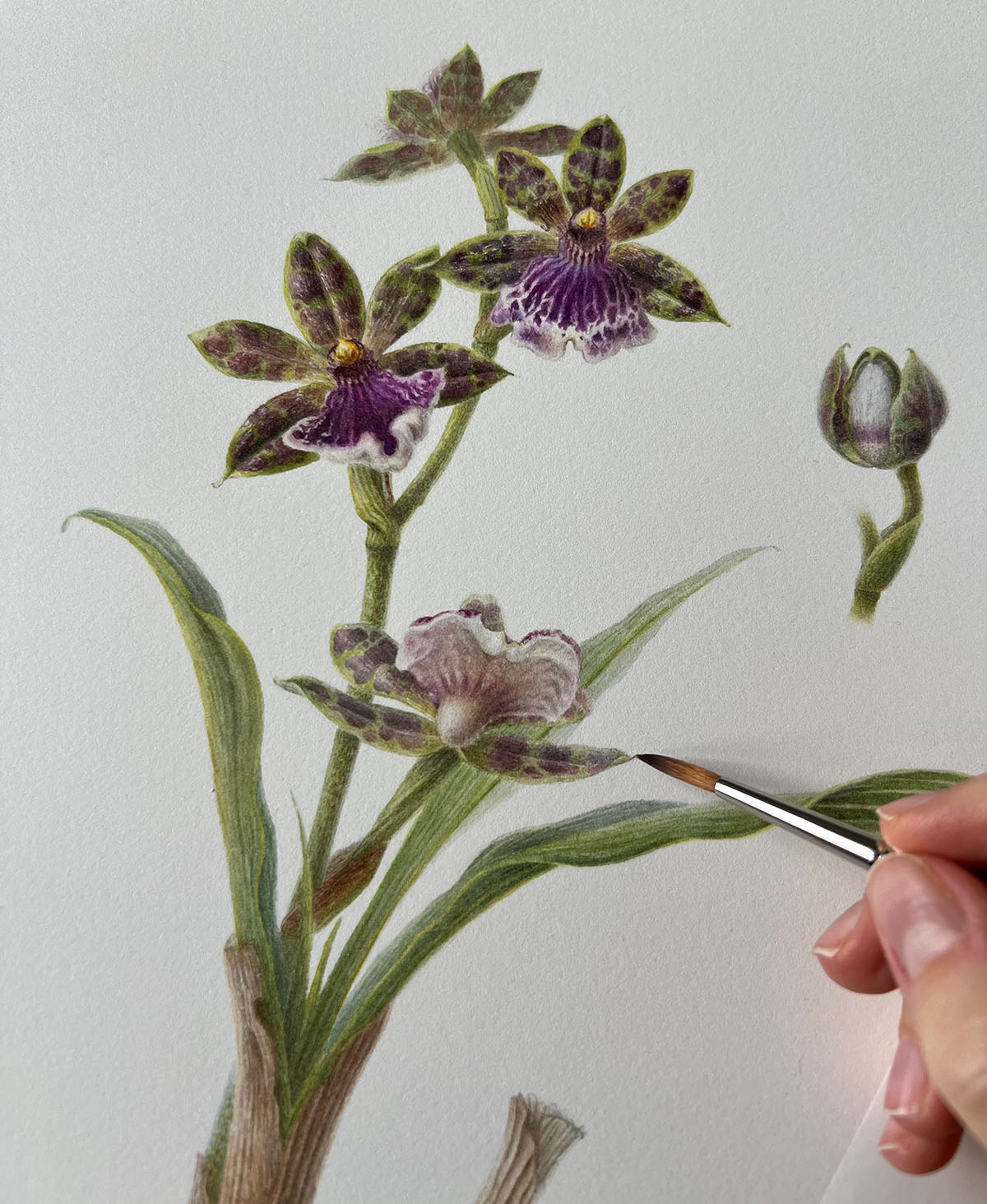
In mid-December — on my birthday, as it happened — the painting was complete.
But finishing the painting was only half the story. There was still the scanning, the jury selection, the framing, the transport to Dresden. That part deserves its own chapter — and you can read it now in Part 2.
Studio Letter
My Signature Palette


